
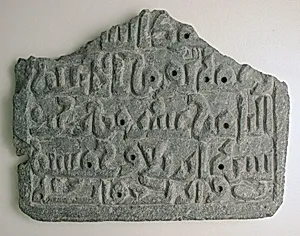
Gravestone Dated 1062, Reused in 1128
Unknown Artist
dated A.H. 522/1128 CE
Medium
Steatite; carved
Dimensions
H. 6 5/16 in. (16 cm) W. 8 11/16 in. (22 cm) D. 1 in. (2.5 cm)
Classification
Stone
Department
Islamic Art
Museum
Metropolitan Museum of Art, New York, NY
Credit
Rogers Fund, 1948
Accession Number
48.101.2
Rights
Public Domain
Tags
Art Historical Context
This modest gravestone, carved from steatite—a soft, lustrous soapstone prized in Islamic art for its workability—measures just 6½ by 8⅝ inches, making it a portable relic of personal devotion. Dated to A.H. 522 (1128 CE) in the Islamic calendar, it bears an earlier inscription from 1062, revealing its reuse over six decades. Such recycling was common in medieval Islamic societies, where durable stones were repurposed amid shifting dynasties or urban growth, preserving history while honoring the deceased. Housed in the Metropolitan Museum of Art's Islamic Art department (acquired via the Rogers Fund in 1948), this artifact exemplifies the centrality of Arabic epigraphy in funerary monuments. The intricate carving likely features elegant Kufic or early Naskh script, conveying prayers, names, and dates—essential elements in Islamic burial traditions that emphasized remembrance and the afterlife. Its survival underscores the resilience of these intimate objects, bridging the 11th and 12th centuries in regions like Persia or Central Asia. Though the maker remains unknown, the gravestone's dual chronology offers a poignant glimpse into life's impermanence and material continuity, inviting visitors to ponder the stories etched into its surface.