
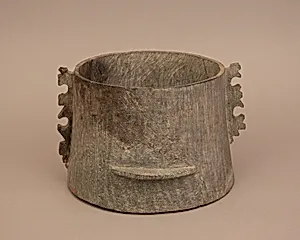
Cauldron
Unknown Artist
9th century
Medium
Steatite; carved
Dimensions
H. 6 7/8 (17.5 cm) Diam. (at top): 8 3/4 in. (22.2 cm)
Classification
Stone
Department
Islamic Art
Museum
Metropolitan Museum of Art, New York, NY
Credit
Rogers Fund, 1938
Accession Number
38.40.161
Rights
Public Domain
Art Historical Context
Nestled in the Metropolitan Museum of Art's Islamic collection, this 9th-century carved steite cauldron exemplifies the exquisite stonework of the early Islamic world. Standing at 6 7/8 inches tall with an 8 3/4-inch diameter at the top, compact form suggests practical use—perhaps for cooking, rituals, or storage—while its smooth, lustrous surface hints at the talismanic qualities often attributed to soapstone vessels. Crafted from steatite, a soft yet durable stone prized for its carvability, the cauldron reflects advanced lapidary techniques of the Abbasid era. Artisans likely employed fine chisels and abrasives to shape its rounded body and flared rim, achieving a polished finish that evokes the era's mastery of everyday luxury objects. Such vessels were common in households across the Islamic heartlands, blending utility with subtle artistry. Though the artist remains unknown, this piece underscores the cultural vibrancy of 9th-century Islam, where even humble domestic items embodied refined craftsmanship. Acquired through the Rogers Fund in 1938, it invites visitors to appreciate how steatite's warmth and workability transformed stone into enduring symbols of daily life.