
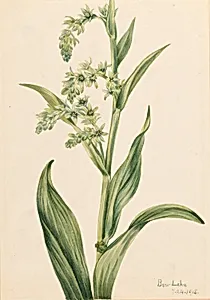
Green Bear Cabbage (Veratrum viride)
Medium
Painting
Classification
Painting
Department
Smithsonian Collection
Museum
Smithsonian American Art Museum
Credit
Smithsonian American Art Museum, Gift of the artist
Accession Number
1970.355.512
Rights
Public Domain
Tags
Art Historical Context
Mary Vaux Walcott'sGreen Bear Cabbage (Verrum viride)*, in 1918, the striking green hues and intricate structure of the wildflower Veratrum vir, also known as green false hellebore or pokeweed. Now housed in the Smithsonian American Museum as a gift from the artist herself, this painting exemplifies Walcott's dedication to documenting North America's native flora with scientific precision and artistic grace. Walcott, a self-ta artist and avid naturalist (1860–1940), created this work amid her expeditions through rugged landscapes like the Canadian Rockies, often alongside her geologist husband. Her paintings transcend mere decoration, serving as valuable botanical records that blend realism with subtle color mastery—likely in watercolor, her favored medium for such delicate subjects. At age 58, she produced hundreds of similar illustrations, later compiled in her influential 1925 book *North American Wild Flowers*. This piece highlights the early 20th-century fusion of art and science, inviting visitors to appreciate not just the plant's toxic beauty (used cautiously in traditional medicine) but Walcott's enduring legacy as a trailblazing woman in both fields. A testament to patient observation, it reminds us how art can preserve nature's fleeting wonders.