
Groom and Rider
Unknown Artist
1540–50
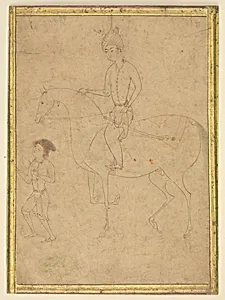
Medium
Ink and watercolor on paper
Dimensions
Painting: H. 4 3/8 in. (11.1 cm) W. 3 1/4 in. (8.3 cm) Page: H. 4 5/8 in. (11.7 cm) W. 3 7/16 in. (8.7 cm) Mat: H. 19 1/4 in. (48.9 cm) W. 14 1/4 in. (36.2 cm)
Classification
Codices
Department
Islamic Art
Museum
Metropolitan Museum of Art, New York, NY
Credit
Gift of George D. Pratt, 1925
Accession Number
25.83.5
Rights
Public Domain
Tags
Art Historical Context
Nestled within the Islamic Art collection at the Metropolitan Museum of Art, *Groom and Rider* a delicate ink and watercolor painting on paper from 1540–50, likely a folio from a codex or illustrated manuscript. Measuring just 4 3/8 by 3 1/4 inches, this intimate work captures a groom attending to a rider and horse, evoking the equestrian world central to 16th-century Islamic culture. Gifted by George D. Pratt in 1925, it exemplifies the miniature tradition of Safavid Persia (modern Iran), where such scenes often adorned luxurious books of poetry, history, or epics. The unknown artist's mastery shines in the precise ink outlines and subtle watercolor washes, techniques honed for manuscript illumination. These small-scale works demanded extraordinary skill to convey dynamic figures and animals with lifelike poise, reflecting the period's emphasis on harmony between human and beast. Horses, symbols of nobility and speed in Persian art, dominate the composition alongside the men, highlighting themes of companionship and status. This gem offers a window into Safavid artistic brilliance, where everyday nobility was elevated to poetic beauty. Visitors can marvel at its preserved vibrancy, a testament to the enduring allure of Islamic codices.