
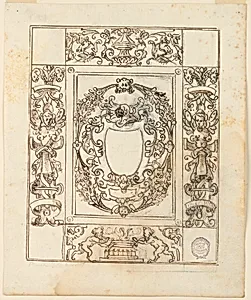
Grotesque Design
early 17th century
Classification
ornament
Department
Smithsonian Collection
Museum
Smithsonian American Art Museum
Credit
Museum purchase through gift of various donors
Accession Number
1901-39-1747
Rights
Public Domain
About this artwork
Research in Progress
Art Historical Context
Welcome to the Smithsonian American Art Museum, where our "Grotesque Design" from the early 17th century invites you into the whimsical world of ornamental art. Classified as an ornament, this intriguing piece exemplifies the grotesque style—a fantastical blend of intertwined human figures, mythical creatures, flora, and architectural motifs. Revived during the Renaissance from ancient Roman frescoes discovered in the 15th century, grotesques became a hallmark of decorative arts by the Baroque era, adorning everything from walls and ceilings to prints, ceramics, and furniture. Though the artist and medium remain unknown—pending ongoing research—this design reflects the era's exuberant creativity, where artisans delighted in playful exaggeration and asymmetry to captivate the eye. In the early 1600s, such motifs flourished across Europe, influencing colonial American crafts as settlers brought European tastes to the New World. Acquired through museum purchase with gifts from various donors, it highlights the Smithsonian's commitment to preserving enigmatic treasures. Step closer and imagine this pattern enlivening a grand mantel or illuminated manuscript— a testament to how everyday ornament could spark wonder and storytelling in 17th-century life. Research continues to uncover its secrets, making it a living puzzle for visitors like you!
About the Artist
Unknown
The artist designated as "Unknown" in our virtual museum's collection exemplifies a poignant chapter in art history: creators whose identities have faded into obscurity despite the enduring power of their work. With only one known artwork attributed to them in our holdings, this figure represents countless anonymous hands that shaped visual culture across centuries. Museums worldwide, including th...