
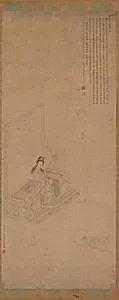
Guanyin and Shancai
16th-17th century
Classification
Painting
Department
Smithsonian Collection
Museum
Smithsonian American Art Museum
Credit
Gift of Charles Lang Freer
Accession Number
F1911.267
Rights
Public Domain
Tags
About this artwork
Guanyin and her baby.
Art Historical Context
This 16th-17th century Chinese painting, titled *Guanyin and Shancai*, portrays the beloved Buddhist bodhisattva of compassion alongside her youthful attendant. Created during the Ming dynasty the work reflects the era’s deep reverence for Buddhist themes, which were widely celebrated in Chinese art and daily spiritual life. Guanyin’s serene presence, often shown with a halo, offered comfort and protection to devotees, while the child figure represents Shancai (Sudhana), a disciple symbolizing devotion and learning. The painting is executed in the refined *baimiao* style, characterized by delicate, precise ink lines that emphasize graceful forms and spiritual elegance without heavy color. Formerly attributed to the celebrated Ming master Qiu Ying, known for his meticulous brushwork, the piece highlights the technical sophistication of Ming court and literati painting traditions. Now part of the Smithsonian’s collection through the generosity of Charles Lang Freer, this artwork invites viewers to appreciate how Chinese artists blended Buddhist iconography with masterful technique to convey timeless messages of mercy and enlightenment.