
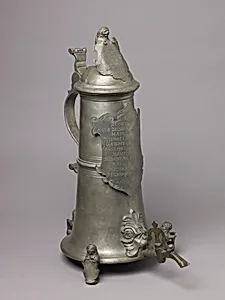
Guild Tankard (Zunftkanne) or Schleifkanne
Unknown Artist
1604, with late 18th or early 19th century additions
Medium
Pewter, spigot, and turncock of copper alloy.
Dimensions
H. 62.2 cm
Classification
Metalwork
Culture
German, Nuremberg
Department
Robert Lehman Collection
Museum
Metropolitan Museum of Art, New York, NY
Credit
Robert Lehman Collection, 1975
Accession Number
1975.1.1474
Rights
Public Domain
Tags
Art Historical Context
This magnificent Guild Tankard, known as a *Zunftkanne* or *Schleifkanne*, hails from Nuremberg, Germany, a renowned hub of Renaissance metalworking craftsmanship. Crafted in 1604 with later additions from the late 18th or 19th century, stands an impressive 62.2 cm tall, embodying the communal spirit of medieval and early modern guilds. These vessels were prized ceremonial objects used during feasts, meetings, and oaths, symbolizing the prestige and solidarity of trade associations like those of artisans or merchants. Made primarily of durable pewter—a popular alloy for its silvery sheen and workability—the tankard features a copper alloy spigot and turncock for controlled pouring, highlighting innovative functional design. Lions, likely rendered in relief or engraving, adorn its surface, evoking strength, nobility, and protection, motifs common in German guild heraldry. Nuremberg's pewterers were masters of such intricate casting and chasing techniques, blending utility with symbolic artistry. Now part of the Robert Lehman Collection at The Metropolitan Museum of Art (acquired 1975), this tankard offers a tangible link to early modern social rituals, reminding us how everyday objects became treasures of civic pride and enduring legacy.