
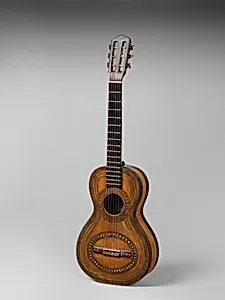
Guitar
before 1858
Medium
Pine, maple, mahogany, walnut, ebony
Classification
Chordophone-Lute-plucked-fretted
Culture
Spanish
Department
Musical Instruments
Museum
Metropolitan Museum of Art, New York, NY
Credit
Purchase, Clara Mertens Bequest, in memory of André Mertens, 1992
Accession Number
1992.46a, b
Rights
Public Domain
Art Historical Context
This exquisite Spanish guitar, crafted by master luthier Pedro Fuentes before1858, exemplifies the age of guitar-making in 19th-century Spain.oused in the Metropolitan Museum of Art's of Musical Instruments (acquired in 1992 through the Clara Mertens Be), it belongs to the chordophone-lute-pluckedretted classification—a category that highlights its six-string design with frets for precise intonation, ideal for the intricate fingerpicking styles of Spanish classical music. Fuentes skillfully combined premium woods—pine for the soundboard to ensure resonant tone, maple and mahogany for structural strength and warmth, walnut for decorative richness, and ebony for durable accents—demonstrating advanced lutherie techniques. These materials not only enhanced acoustic projection but also showcased the artisan's mastery in balancing aesthetics and functionality, a hallmark of Spanish instrument craftsmanship during a period when the guitar was evolving from folk staple to concert virtuoso's tool. As a cultural artifact, this guitar offers a window into Spain's vibrant musical heritage, bridging Romantic-era composers like Fernando Sor and the rise of the modern classical guitar. Visitors can appreciate how such instruments fueled flamenco and classical traditions, their elegant forms as much visual art as sonic marvel.