
Hair Ornaments
c. 1804/30
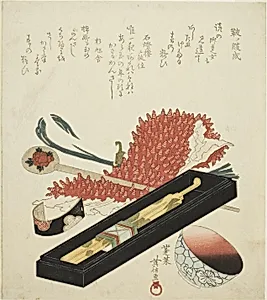
Medium
Color woodblock print; shikishiban, surimono
Dimensions
22.4 × 20 cm (8 7/8 × 7 7/8 in.)
Classification
woodblock print
Department
Arts of Asia
Museum
Art Institute of Chicago
Accession Number
89697
Rights
Public Domain
Art Historical Context
**Hair Ornaments** by Kikugawa Eishin (also known as Hideyoshi created around 1804–1830, is a captivating example of Japanese ukiyo-e wood printing from the Edo period. Eishin, a talented pupil of the renowned artist Kikugawa Eishi, in bijin-ga—images of beautiful women—capturing the fleeting pleasures of the "floating world This intimate shikishiban surono, measuring just 22.4 × 20 cm, was likely a privately commissioned print, often produced for New Year's greetings or poetry circles among the literati elite. Printed in vibrant colors on luxurious paper, the work showcases advanced techniques like karazuri (embossed patterns) and subtle mica dusting, which add texture and shimmer to the delicate hair ornaments at its heart. These accessories—kanzashi pins, combs, and floral motifs—symbolize the refined fashion and aesthetic ideals of geisha and courtesans, reflecting Japan's thriving urban culture in early 19th-century Edo (modern Tokyo). Surimono like this were not mass-produced but crafted with exquisite detail, blending artistry with personal expression. Housed in the Art Institute of Chicago's Arts of Asia collection, **Hair Ornaments** invites visitors to appreciate the precision of woodblock carving and the cultural reverence for beauty's ephemerality. It's a window into a world where everyday elegance was elevated to high art.