
Halberd
Unknown Artist
15th century
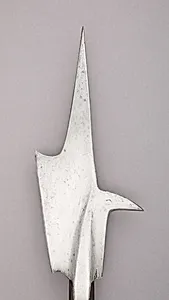
Medium
Steel, wood (oak)
Dimensions
L. 84 3/4 in. (215.2 cm); L. of head 16 in. (40.6 cm); W. 7 in. (17.8 cm); Wt. 5 lbs. 13 oz. (2640 g)
Classification
Shafted Weapons
Culture
German
Department
Arms and Armor
Museum
Metropolitan Museum of Art, New York, NY
Credit
Gift of Mrs. Bashford Dean, in memory of Alexander McMillan Welch, 1949
Accession Number
49.120.11
Rights
Public Domain
Art Historical Context
This imposing 15th-century German halberd, a masterwork of functional arms and armor, exemplifies the pinnacle of medieval weapon craftsmanship. Crafted from forged steel for its axe-like blade, spear point, and rear spike, and fitted to a sturdy oak shaft, it measures an impressive 84¾ inches in length, with a 16-inch head and weighing nearly 6 pounds. Housed in the Metropolitan Museum of Art's Arms and Armor Department, it was generously gifted by Mrs. Bashford Dean in memory of Alexander McMillan Welch in 1949. Halberds like this one emerged in late medieval Europe as versatile shafted weapons, ideal for infantry to counter heavily armored knights by slashing, thrusting, or hooking foes from a safe distance. In 15th-century Germany, they became symbols of military innovation, wielded by foot soldiers in pivotal battles that shifted warfare from feudal cavalry to disciplined pike formations. The robust steel construction highlights advanced metallurgical techniques, balancing lethality with durability. Though by an unknown artisan, this halberd's precise proportions and materials reflect the era's blend of artistry and utility—true "arms as art." Visitors will appreciate its tangible link to a turbulent age of chivalry and conflict.