
Hanazono bantsuzuki
ca. 1822
Medium
nishikie, with metallic pigments
Dimensions
203; 176
Rights
Public Domain
About this artwork
nishikie, with metallic pigments
Art Historical Context
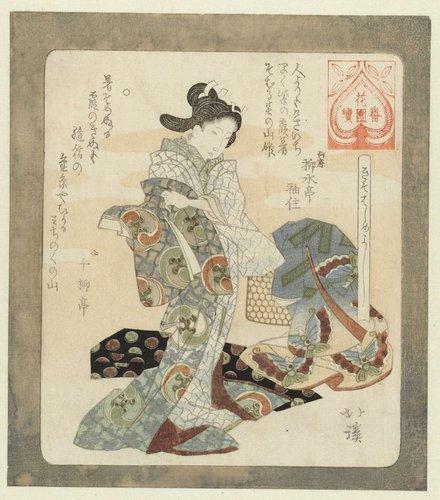
**Hanazono bantsuzuki** by Totoya Hokkei, around 1822, is a captivating example of Japanese woodblock printing from the late Edo period. Measuring just 203 mm high by 176 mm wide, this intimate *nishikie*—or "brocade pictureshowcases Hokkei's mastery in the ukiyo-e tradition. As a pupil of the renowned Katsushika Hokusai, Hokkei was known for his refined designs, often producing surimono, luxurious private prints commissioned for poetic gatherings, New Year's, or special occasions. The *nishikie* technique revolutionized printmaking by employing multiple woodblocks to layer vibrant colors, mimicking the richness of silk brocades. Hokkei's use of metallic pigments—likely gold or silver—adds a luminous, shimmering quality, elevating the work's elegance and evoking the fleeting beauty of nature, as hinted by the title evoking a "flower garden" scene (*hanazono*). These pigments, applied with precision, caught the light in ways that transformed static images into dynamic experiences. In cultural context, such prints were cherished artifacts of Japan's urban literati, blending art, poetry, and seasonal motifs. Hokkei's piece reflects the era's fascination with ephemerality and refinement, offering visitors a window into the sophisticated world of 19th-century Japanese aesthetics. (198 words)
About the Artist
Totoya Hokkei · 1780–1850
Totoya Hokkei (魚屋 北渓, 1780–1850), born Iwakubo Tatsuyuki in Edo (modern Tokyo), began his life as a humble fishmonger in the Yotsuya Samegahashi district, a trade reflected in his art name "Totoya," meaning fish shop. He transitioned to art through rigorous training, first studying under Kanō Yōsen'in Korenobu, head of the Kobikichō branch of the prestigious Kanō school, where he honed landscape p...