
Hanazono bantsuzuki
ca. 1822
Medium
nishikie, with metallic pigments
Dimensions
178; 203
Rights
Public Domain
About this artwork
verzamelaarsmerk, verso, gestempeld: Lugt 2228
Art Historical Context
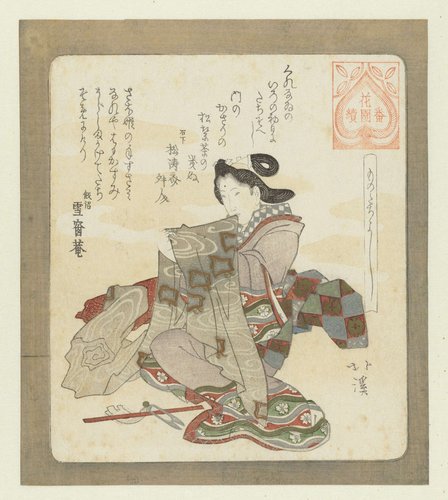
**Hanazono bantsuzuki** by Totoya Hokkei, around 1822, exemplifies the world of Japanese ukiyo-e woodblock prints during the late Edo period. Hokkei, skilled pupil of the master Katsushika Hokusai, specialized in *surimono*—luxurious, privately commissioned prints often exchanged among poetry enthusiasts. This *nishikie* (brocade print), measuring a compact 203 × 178 mm, bursts with vibrant colors achieved through intricate woodblock layering, enhanced by shimmering metallic pigments that evoke the dew-kissed petals of a flower garden (*hanazono*). The title suggests a serene floral scene, a popular motif in ukiyo-e celebrating nature's fleeting beauty amid Japan's urban "floating world." Hokkei's technique shines in the precise registration of colors and metallic accents, which catch the light like real brocade, elevating the print from everyday art to a collector's treasure. On the verso, a stamped collector's mark (Lugt 2228) hints at its esteemed European provenance, linking this Edo-era gem to global art history. As a snapshot of 19th-century Japanese craftsmanship, *Hanazono bantsuzuki* invites us to appreciate how prints like this fostered cultural exchange through poetry and aesthetics, bridging personal expression with timeless elegance.
About the Artist
Totoya Hokkei · 1780–1850
Totoya Hokkei (魚屋 北渓, 1780–1850), born Iwakubo Tatsuyuki in Edo (modern Tokyo), began his life as a humble fishmonger in the Yotsuya Samegahashi district, a trade reflected in his art name "Totoya," meaning fish shop. He transitioned to art through rigorous training, first studying under Kanō Yōsen'in Korenobu, head of the Kobikichō branch of the prestigious Kanō school, where he honed landscape p...