
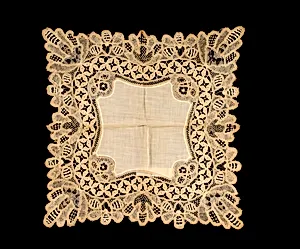
Handkerchief
Unknown Artist
second quarter 19th century
Medium
Linen
Classification
Handkerchief
Culture
American
Department
Costume Institute
Museum
Metropolitan Museum of Art, New York, NY
Credit
Brooklyn Museum Costume Collection at The Metropolitan Museum of Art, Gift of the Brooklyn Museum, 2009; Gift of Jane Buck Hellawell, 1992
Accession Number
2009.300.6068
Rights
Public Domain
Art Historical Context
This delicate linen handkerchief, crafted by an unknown American artist in the second quarter the 19th century (circa 1826–1850), offers a glimpse into everyday elegance of the era. As part of the Costume Institute's collection at The Metropolitan Museum of Art, exemplifies the fine textiles produced or imported for personal use during a time when America was expanding its domestic textile industry alongside European influences. Linen, prized for its breathability, durability, and subtle sheen, was a staple for handkerchiefs—versatile items carried for practicality, fashion, or sentiment. In 19th-century American culture, handkerchiefs transcended mere utility; they served as accessories for both men and women, often monogrammed or embroidered as tokens of affection or status symbols. This piece, gifted through the Brooklyn Museum Costume Collection, highlights the craftsmanship of the period, when hand-sewn linens reflected homemaking skills and emerging middle-class refinement amid industrialization. Preserved as a cultural artifact, it invites us to ponder the intimate stories woven into such simple objects—perhaps waved in farewell, dabbed in joy, or tucked into a pocket during westward journeys. A quiet testament to 19th-century life, it reminds visitors of fashion's role in everyday history.