
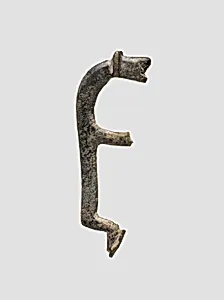
Handle
Unknown Artist
ca. 3rd–7th century CE
Medium
Pewter
Dimensions
1.25 x 3.75 in. (3.18 x 9.53 cm)
Classification
Metalwork-Implements
Culture & Period
Sasanian · Sasanian
Department
Ancient Near Eastern Art
Museum
Metropolitan Museum of Art, New York, NY
Credit
Rogers Fund, 1934
Accession Number
34.107.86
Rights
Public Domain
Art Historical Context
This delicate pewter handle, dating to the Sasanian (ca. 3rd–7th century CE), hails from the ancient Near East and exemplifies the everyday artistry of the Sasanian Empire, which spanned modern-day Iran and beyond. Measuring just 1.25 x 3.75 inches, this small metalwork implement—likely part of a vessel tool, or utensil—reflects the practical yet refined craftsmanship of a culture renowned for its sophisticated metalworking traditions. Acquired through the Rogers Fund in 4, it now resides in the Metropolitan Museum of Art's Department of Ancient Near Eastern Art. The Sasanians, who ruled from 224 to 651 CE as successors to the Achaemenid Persians, were masters of metallurgy, producing everything from royal silver plate to utilitarian objects like this one. Pewter, an alloy primarily of tin with traces of other metals, was valued for its malleability and corrosion resistance, making it ideal for durable household items. Artisans likely cast or hammered it into shape, showcasing techniques that bridged functionality and subtle elegance amid the empire's Zoroastrian-influenced society. Though its exact use remains a tantalizing mystery, this handle offers a window into Sasanian daily life—where even humble tools embodied the empire's enduring legacy of innovation and cultural exchange with Rome and Byzantium. A reminder that beauty often hid in the practical.