
Pin
Unknown Artist
ca. 8th–7th century BCE
Medium
Bronze
Dimensions
1.89 x 2.72 in. (4.8 x 6.91 cm)
Classification
Metalwork-Ornaments
Culture & Period
Iran · Iron Age III
Department
Ancient Near Eastern Art
Museum
Metropolitan Museum of Art, New York, NY
Credit
Rogers Fund, 1930
Accession Number
30.97.18
Rights
Public Domain
Tags
Art Historical Context
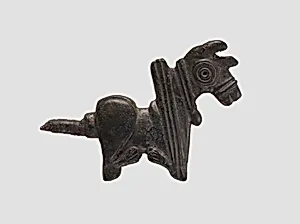
This delicate bronze pin, crafted around the 8th–7th century during Iran's Iron Age III, offers a glimpse into the daily adornments of ancient Near Eastern. Measuring just 1.89 x 2.72 inches, its small scale suggests it was used to secure clothing or hair, blending functionality with artistry. The motif of horses—evident from design—highlights their cultural prominence, likely symbolizing speed, power, or status in a region where equestrian traditions were emerging among nomadic and settled communities. As a fine example of Iron Age metalwork from ancient Iran, the pin showcases skilled bronze casting techniques, where artisans melted and molded the alloy to create intricate details. Bronze ornaments like this were prized possessions, often buried with their owners or traded across vast networks, reflecting the technological sophistication and interconnected trade routes of the time. Housed in the Metropolitan Museum of Art's Department of Ancient Near Eastern Art (Rogers Fund, 1930), this unassuming artifact bridges the ornamental and the symbolic, inviting us to ponder the lives of those who wore it millennia ago.