
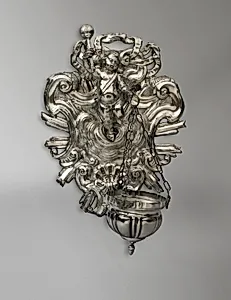
Hanging Wall Stoup with Angel
1815–1870
Classification
metalwork
Department
Smithsonian Collection
Museum
Smithsonian American Art Museum
Credit
Gift of George A. Hearn
Accession Number
1907-14-2
Rights
Public Domain
About this artwork
Research in Progress
Art Historical Context
Nestled in the Smithsonian American Art Museum's collection the *Hanging Wall Stoup with Angel is a delicate example of 19th-century metalwork, dating from 1815 to 1870. A stoup traditionally served as a holy water font in churches or homes, mounted on walls for easy access during rituals. This hanging version, designed for practical devotion, reflects the era's blend of functionality and piety in everyday religious life, when craftsmanship flourished amid America's growing industrial capabilities and waves of European immigration bringing Catholic traditions. Though the artist remains unknown and research continues, the piece's standout feature—an angelic figure—adds a touch of celestial grace, likely symbolizing protection and divine presence. Crafted in metal, it showcases techniques like casting or repoussé, common in decorative metalwork of the time, which allowed for intricate detailing on modest objects. Donated by philanthropist George A. Hearn, it highlights how personal faith artifacts entered public collections, preserving glimpses of spiritual culture. This stoup invites visitors to ponder the intimate role of art in 19th-century worship, bridging the sacred and the handmade in early American homes and sanctuaries. (198 words)
About the Artist
Unknown
The artist designated as "Unknown" in our virtual museum's collection exemplifies a poignant chapter in art history: creators whose identities have faded into obscurity despite the enduring power of their work. With only one known artwork attributed to them in our holdings, this figure represents countless anonymous hands that shaped visual culture across centuries. Museums worldwide, including th...