
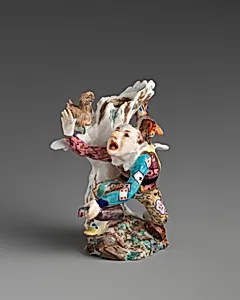
Harlequin and rooster
ca. 1755–60
Medium
Soft-paste porcelain
Dimensions
2 3/4 × 2 in. (7 × 5.1 cm)
Classification
Ceramics-Porcelain
Culture
British, Chelsea
Department
European Sculpture and Decorative Arts
Museum
Metropolitan Museum of Art, New York, NY
Credit
Gift of Irwin Untermyer, 1964
Accession Number
64.101.607
Rights
Public Domain
Tags
Art Historical Context
Nestled in the European Sculpture and Decorative Arts at the Metropolitan Museum of Art, *Harlequin and Rooster* is a delightful-paste porcelain figurine by the Chelsea Porcelainufactory around 1755–60. Measuring just 2¾ × 2 inches, this petite British treasure captures a playful scene of the mischievous Harlequin—a stock character from commedia dell'arte theater—paired with a spirited rooster. Gifted by Irwin Untermyer in 4, it exemplifies the's "gold anchor" period wares, known for their vibrant enameling and intricate modeling. Chelsea, one of England's pioneering porcelain factories founded in the 1740s, specialized in soft-paste porcelain, a bone-ash formula that mimicked the prized Chinese hard-paste but allowed for softer, more fluid shapes before true hard-paste was mastered in Britain. These whimsical figures, often inspired by European ceramics like Meissen, reflected the Rococo taste for lighthearted, theatrical motifs amid the mid-18th-century elite's passion for decorative tabletop ornaments. This charming piece highlights porcelain's role as an accessible luxury, blending artistry with everyday whimsy—imagine it adorning a gentleman's cabinet, evoking laughter and surprise. Its cultural nod to Harlequin's antics underscores the era's love for performance and fantasy in the home.
About the Artist
Chelsea Porcelain Manufactory · 1744–1784
**Chelsea Porcelain Manufactory** The Chelsea Porcelain Manufactory, Britain's pioneering porcelain enterprise, was founded around 1743 in Chelsea, London, by two Huguenot silversmiths: Nicholas Sprimont from Liège and Charles Gouyn. Sprimont, trained in Paris as a goldsmith before immigrating to England, brought his expertise in luxury metalwork to the venture, while Gouyn handled early sales th...