
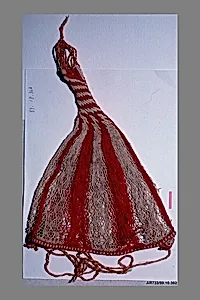
Hat
Unknown Artist
5th–9th century
Medium
Linen, wool; sprang technique
Classification
Textiles
Department
Islamic Art
Museum
Metropolitan Museum of Art, New York, NY
Credit
Purchase by subscription, 1889
Accession Number
89.18.362
Rights
Public Domain
Art Historical Context
This exquisite "Hat" from the Metropolitan Museum of Art's Islamic Art collection dates to the 5th–9th century, a formative period bridging late antiquity and the early Islamic era. Crafted from linen wool using the rare sprang technique, it exemplifies the ingenuity of ancient textile artisans. Sprang, a non-loom method involving the direct manipulation and twisting of warp threads, an elastic, resilient fabric ideal for fitted garments like headwear—perfect for everyday protection against sun, sand, and wind in the diverse climates of the Islamic world. Head coverings held profound cultural and practical significance in early Islamic societies, symbolizing modesty, status, and regional identity. This hat, likely from Egypt or the broader Near East where sprang flourished among Coptic and early Muslim communities, highlights the continuity of pre-Islamic crafting traditions into the new faith's golden age. Its survival underscores the durability of these materials and techniques, offering a tangible link to daily life when monumental architecture dominated surviving art. Acquired through a public subscription purchase in 1889, this textile treasure invites us to appreciate the overlooked artistry of the anonymous maker, reminding visitors that Islamic innovation thrived in the fibers of fabric as much as in grand mosques.