
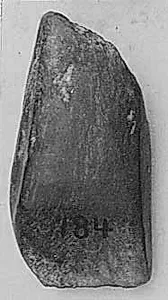
Hatchet
Unknown Artist
Medium
Nephrite
Dimensions
H. 2 11/16 in. (6.8 cm); W. 1 5/16 in. (3.3 cm); D. 11/16 in. (1.8 cm)
Classification
Jade
Culture
Switzerland
Department
Asian Art
Museum
Metropolitan Museum of Art, New York, NY
Credit
Gift of Heber R. Bishop, 1902
Accession Number
02.18.184
Rights
Public Domain
Art Historical Context
This exquisite nephrite hatchet, just 2⅝ inches high, showcases the remarkable craftsmanship of an unknown artist from ancient Swiss culture. Carved from nephrite—a tough, translucent form of jade prized for its durability and lustrous green hue—this small tool (H. 2 11/16 in.; W. 1 5/16 in.; D. 11/16 in.) likely served both practical and ceremonial purposes. Its compact size suggests portability, perhaps as a handheld implement or status symbol in prehistoric communities. Housed in the Metropolitan Museum of Art's Asian Art Department and classified as jade, the hatchet reflects intriguing cultural exchanges. While rooted in Switzerland, nephrite's presence hints at long-distance trade networks, as this material was rare in Europe and often sourced from distant regions. Such artifacts from Swiss lake-dwelling societies highlight early mastery of hard-stone carving techniques, where artisans polished the resilient jade to a smooth, gleaming finish without metal tools. A generous gift from Heber R. Bishop in 1902, this hatchet invites visitors to ponder the global story of jade—from Asian origins to Alpine adoption—bridging continents and eras in a single, timeless object.