
Head
Unknown Artist
8th–10th century
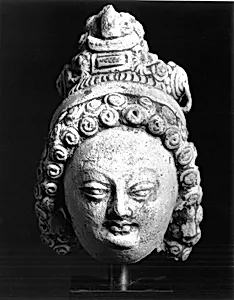
Medium
Stucco with traces of gilt and paint
Dimensions
H. 5 1/2 in. (14 cm); W. 3 3/4 in. (9.5 cm); D. 3 1/2 in. (8.9 cm)
Classification
Sculpture
Culture
China
Department
Asian Art
Museum
Metropolitan Museum of Art, New York, NY
Credit
Samuel Eilenberg Collection, Gift of Samuel Eilenberg, 1987
Accession Number
1987.142.72
Rights
Public Domain
Tags
Art Historical Context
This exquisite stucco head, crafted in China during the 8th–10th century, offers a glimpse into the refined artistry of the Tang and early Song periods. Measuring just 5½ inches high, it likely served as part of a larger architectural ensemble, such as a temple niche or cave shrine decoration. The use of stucco—a molded plaster made from lime, sand, and fibers—allowed artisans to create intricate details with relative ease, while traces of gilt and paint reveal its original vibrant allure, evoking the splendor of imperial Buddhist art. The subtle modeling of the face, with its serene expression and softly rounded features, reflects the era's mastery of naturalistic portraiture in religious sculpture. Gilding and polychromy were hallmarks of Tang-era techniques, enhancing the divine glow of sacred figures and drawing worshippers into spiritual contemplation. Such small-scale works were common in monastic complexes like those at Dunhuang, underscoring China's flourishing Buddhist culture amid Silk Road exchanges. Generously gifted to the Metropolitan Museum of Art in 1987 from the Samuel Eilenberg Collection, this "Head" invites visitors to ponder the fragility of ancient devotion—its delicate preservation a testament to enduring craftsmanship.