
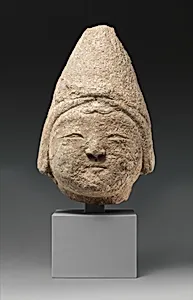
Head of a Central Asian Figure in a Pointed Cap
Unknown Artist
12th–early 13th century
Medium
Gypsum plaster; modeled, carved
Dimensions
H. 8 1/2 in. (21.6 cm) W. 5 3/8 in. (13.7 cm) D. 5 1/4 in. (13.3 cm)
Classification
Stucco-Sculpture
Department
Islamic Art
Museum
Metropolitan Museum of Art, New York, NY
Credit
Gift of Abby Aldrich Rockefeller, 1942
Accession Number
42.25.17
Rights
Public Domain
Tags
Art Historical Context
This evocative gypsum plaster sculpture, titled *Head of a Central Asian in a Pointed Cap dates to the 12th–early 13th century captures the refined artistry of Islamic Central Asia. Measuring just 8½ inches high, the piece was meticulously modeled and carved, techniques that allowed artisans to achieve lifelike details in facial features and the distinctive tall, pointed cap. Stucco, a versatile medium made from gypsum plaster, was widely used in the region for architectural decorations like mihrabs, niches, and wall reliefs in mosques and madrasas, offering a lightweight yet durable surface for intricate work. Housed in the Metropolitan Museum of Art's Department of Islamic Art, this head reflects the cultural crossroads of Central Asia during a dynamic era of Seljuk influence and nomadic Turkic traditions. The pointed cap, a hallmark of local attire, evokes the proud figures of warriors, scholars, or elites from steppe cultures, blending Persianate sophistication with rugged frontier aesthetics. Though figurative sculpture was rarer in orthodox Islamic contexts due to aniconic tendencies, such works thrived in eastern realms, showcasing bold realism and technical prowess. A generous gift from Abby Aldrich Rockefeller in 1942, this modest yet masterful fragment invites visitors to ponder the human stories behind medieval Islamic splendor, where everyday symbols like a hat reveal volumes about identity and heritage.