
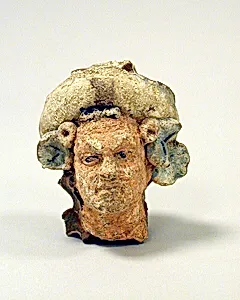
Head of a Satyr
Unknown Artist
3rd–1st century BCE
Medium
Terracotta
Dimensions
H. 4 7/16 in. (11.3 cm)
Classification
Terracottas
Culture & Period
Greek · Hellenistic
Department
Greek and Roman Art
Museum
Metropolitan Museum of Art, New York, NY
Credit
Rogers Fund, 1922
Accession Number
22.139.39
Rights
Public Domain
Tags
Art Historical Context
Behold the *Head of a Satyr a captivating terracotta sculpture from Hellenistic Greece (3rd–1st century BCE), now housed in the Metropolitan Museum of Art Greek and Roman Art Department Crafted by an unknown artist, this-scale portrait—standing just 4 7/16 inches (11.3 cm) tall—captures the mischievous essence of a satyr, the half-man, half-goat companion of Dionysus, god of wine and revelry. Satyrs embodied untamed nature, ecstasy, and the Dionysian spirit, often depicted in art as lively figures frolicking in myths. Hellenistic art marked a shift from the idealized Classical style toward greater realism and emotional expressiveness, influenced by the expansive world of Alexander the Great's successors. This head exemplifies that dynamism, with its textured beard, pointed ears, and perhaps a knowing grin, inviting viewers to imagine the satyr's boisterous tales from ancient festivals or sanctuaries. Terracotta, a fired clay medium, was prized for its accessibility and versatility in the ancient world, allowing mass production via molds for votive offerings, household decorations, or theatrical props. Acquired through the Rogers Fund in 1922, this artifact offers a tangible glimpse into everyday Greek devotion and the vibrant mythology that shaped Western culture.