
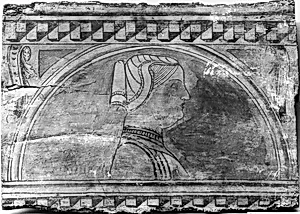
Head of a woman
Unknown Artist
early 16th century
Medium
Tempera on wood
Dimensions
Overall: 14 1/2 × 20 1/2 in. (36.8 × 52.1 cm)
Classification
Paintings-Decorative
Culture
Italian
Department
European Sculpture and Decorative Arts
Museum
Metropolitan Museum of Art, New York, NY
Credit
Gift of Dr. Ernest G. Stillman, 1923
Accession Number
23.188.3
Rights
Public Domain
Tags
Art Historical Context
Behold the delicate *Head of a Woman*, an early 16th-century Italian painting crafted in tempera on wood. intimate portrait, measuring 14½ × 20½ inches, captures a woman's profile with graceful poise, her features rendered in the fine, luminous style typical of tempera—a medium made from pigments bound with egg yolk. Prized in Renaissance Italy for its vibrant clarity and durability on wooden panels, tempera allowed artists to achieve exquisite detail before oil painting gained prominence. Created during the High Renaissance, when Italian masters like Leonardo and Raphael celebrated humanism and classical antiquity, this work echoes the profile views of ancient Roman coins and medals. Though by an unknown hand, it reflects the era's fascination with idealized beauty and individuality, possibly intended as a decorative panel for a private collection or studiolo. Its classification in the Metropolitan Museum of Art's European Sculpture and Decorative Arts department highlights its role beyond mere portraiture—blending painting with ornamental elegance. A generous gift from Dr. Ernest G. Stillman in 1923, this piece invites us to ponder the anonymous talents of Renaissance workshops, offering a window into the refined tastes of Italy's golden age.