
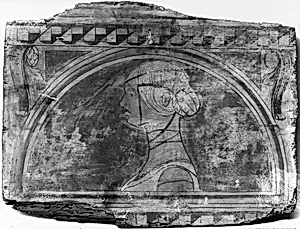
Head of a woman
Unknown Artist
early 16th century
Medium
Tempera on wood
Dimensions
Oerall: 15 5/8 × 20 1/2 in. (39.7 × 52.1 cm)
Classification
Paintings-Decorative
Culture
Italian
Department
European Sculpture and Decorative Arts
Museum
Metropolitan Museum of Art, New York, NY
Credit
Gift of Dr. Ernest G. Stillman, 1923
Accession Number
23.188.6
Rights
Public Domain
Tags
Art Historical Context
Nestled in the Metropolitan Museum of Art's European Sculpture and Decorative department, *Head of a Woman* a captivating early 16th-century Italiana painting on wood, measuring 15 5/8 × 20 1/2 inches. Gifted by Dr. Ernest G. Still in 1923, this intimate profile portrait showcases the refined elegance of Renaissance-era depiction, focusing solely on a woman's serene face in side view. The classification as a decorative painting hints at its possible use in a domestic or ecclesiastical setting, where such panels adorned furniture, cassoni, or altarpieces. Tempera, an egg-based medium applied to wood panel, was the gold standard of Italian painting before oil eclipsed it around this time. Artists built luminous, jewel-like colors through thin glazes and fine brushwork, achieving exquisite detail in features like flowing hair and delicate contours. This technique, rooted in medieval traditions but perfected in the Renaissance, allowed for the subtle modeling of flesh tones and fabrics, evoking a lifelike poise. The profile format draws from classical antiquity—think Roman coins and cameos—revived by Renaissance humanists to celebrate ideal beauty and virtue. Though by an unknown hand, likely from a Florentine or Venetian workshop, it embodies the era's fascination with female grace amid Italy's cultural flowering. A quiet testament to anonymous mastery, it invites visitors to ponder the stories behind her enigmatic gaze.