
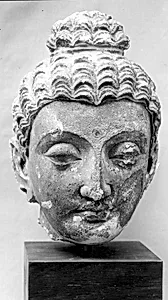
Head of Buddha
Unknown Artist
4th century
Medium
Stucco
Dimensions
H. 9 1/4 in. (23.5 cm)
Classification
Sculpture
Culture
Pakistan (ancient region of Gandhara)
Department
Asian Art
Museum
Metropolitan Museum of Art, New York, NY
Credit
Rogers Fund, 1913
Accession Number
13.96.3
Rights
Public Domain
Tags
Art Historical Context
This serene *Head of Buddha*, crafted in the 4th century stucco in the ancient Gandhara region of Pakistan, the region's pioneering Greco-Buddhist art. Emerging around the 1st century CE after Alexander the Great's conquest, Gandhara blended Hellenistic realism with Buddhist spirituality, creating naturalistic sculptures that humanized divine figures. At just 9¼ inches tall, this piece—likely part of a larger statue—captures the meditative essence of the Buddha, a hallmark of early Mahayana Buddhism's spread along trade routes. Stucco, a molded plaster medium popular in Gandhara due to its affordability and versatility, allowed artisans to achieve fine details like flowing robes and expressive features, often echoing Roman portraiture. The unknown artist's work reflects technical innovations, such as over-life-sized temple adornments that drew pilgrims to monastic sites like Taxila. Housed in the Metropolitan Museum of Art's Asian Art department since 1913 (Rogers Fund), this head highlights Gandhara's role as a cultural crossroads, bridging East and West. It invites visitors to ponder Buddhism's global journey, where stone and stucco immortalized enlightenment for everyday devotees.