
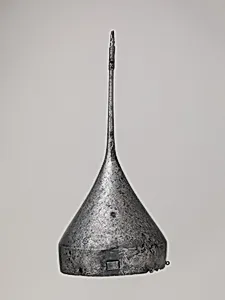
Helmet
Unknown Artist
early 16th century
Medium
Steel, iron, copper alloy, leather
Dimensions
H. 18 3/8 in. (46.7 cm); Wt. 3 lb. 7 oz. (1560 g)
Classification
Helmets
Culture
Southern Russian or Iranian
Department
Arms and Armor
Museum
Metropolitan Museum of Art, New York, NY
Credit
Rogers Fund, 1904
Accession Number
04.3.208
Rights
Public Domain
Art Historical Context
This striking helmet from the early 16th exemplifies the masterful craftsmanship of Southern Russian or Iranian armorers, designed to shield warriors in the turbulent borderlands of Eurasia. Standing at 18⅜ inches tall and weighing a substantial 3 pounds 7 ounces, it reflects the practical demands of mounted combat, where mobility and protection were paramount. Acquired through the Rogers Fund in 4, it now graces the Metropolitan Museum of Art Arms and Armor Department, offering a tangible link to a era of shifting empires and nomadic traditions. Crafted from steel and iron for its durable strength, the helmet incorporates copper alloy—likely for decorative gilding or riveting—and leather lining for comfort and fit. Such multi-material construction highlights advanced metallurgical techniques, blending functionality with subtle artistry. In cultures spanning the steppes to Persia, helmets like this were status symbols for elite fighters, often customized for the rider's physique. Though the artist remains unknown, this piece invites us to ponder the anonymous geniuses whose innovations influenced arms across continents, from the Safavid dynasty to Russian Cossacks. A testament to survival and skill, it reminds visitors of the human stories etched into every rivet and seam.