
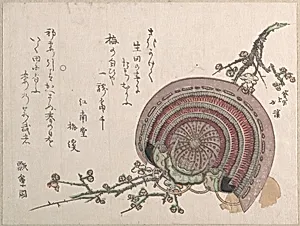
Helmet and Plum Blossoms
Medium
Woodblock print (surimono); ink and color on paper
Dimensions
5 1/2 x 7 1/4 in. (14 x 18.4 cm)
Classification
Prints
Culture & Period
Japan · Edo period (1615–1868)
Department
Asian Art
Museum
Metropolitan Museum of Art, New York, NY
Credit
H. O. Havemeyer Collection, Bequest of Mrs. H. O. Havemeyer, 1929
Accession Number
JP2222
Rights
Public Domain
Tags
Art Historical Context
Discover the delicate artistry of *Helmet and Plum Bloss*, a woodblock printsurimono) by Totoya Hokkei, a Japanese artist of the Edo period (161–1868). Created an unknown date, this intimate work measures just 5½ x 7¼ inches, showcasing the refined scale typical of surimono—privately commissioned prints often produced for special occasions like New Year's greetings. Hokkei, a student of the famed Katsushika Hokusai, mastered ukiyo-e techniques, blending ink and vibrant colors on paper to capture fleeting beauty amid Japan's vibrant urban culture. At its heart, the print juxtaposes a gleaming samurai helmet with delicate plum blossoms, evoking a poetic tension between martial strength and nature's gentle resilience. Plum blossoms, blooming early in harsh winter, symbolize endurance and renewal in Japanese tradition, while the helmet nods to the warrior class. This harmonious contrast reflects Edo-era themes of transience (mono no aware), rendered with Hokkei's precise lines, subtle shading, and luxurious color application—hallmarks of surimono's elevated craftsmanship. Housed in the Metropolitan Museum of Art's Asian Art Department as part of the H. O. Havemeyer Collection (1929 bequest), this gem invites visitors to ponder the samurai's introspective world through Hokkei's masterful printmaking, bridging history and poetry in a single, captivating glance.
About the Artist
Totoya Hokkei · 1780–1850
Totoya Hokkei (魚屋 北渓, 1780–1850), born Iwakubo Tatsuyuki in Edo (modern Tokyo), began his life as a humble fishmonger in the Yotsuya Samegahashi district, a trade reflected in his art name "Totoya," meaning fish shop. He transitioned to art through rigorous training, first studying under Kanō Yōsen'in Korenobu, head of the Kobikichō branch of the prestigious Kanō school, where he honed landscape p...