
Helmet (<i>Suji-Kabuto</i>)
Unknown Artist
late 17th–early 18th century
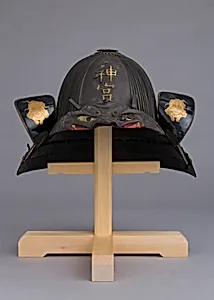
Medium
Iron, lacquer, copper, gold, silk, copper-gold alloy (<i>shakudō</i>)
Dimensions
H. 10 1/4 in. (26 cm); W. 14 1/2 in. (36.8 cm); D. 14 1/2 in. (36.8 cm); Wt. 7 lb. 2 oz. (3231.9 g)
Classification
Helmets
Culture
Japanese
Department
Arms and Armor
Museum
Metropolitan Museum of Art, New York, NY
Credit
Gift of Etsuko O. Morris and John H. Morris Jr., 2018
Accession Number
2018.833.10
Rights
Public Domain
Art Historical Context
This striking *Suji-kabuto* helmet, crafted by an unknown Japanese artist in the late 17th to early 18th century, exemplifies the pinnacle of Edo-period armor craftsmanship. Made primarily from iron plates meticulously riveted together to form raised ridges (*suji*, meaning "stripes"), it measures about 10 inches high and weighs over 7 pounds, offering both formidable protection and an imposing silhouette. Adorned with lacquer for durability and shine, copper, gold, silk laces, and *shakudō*—a copper-gold alloy prized for its dark, velvety patina—the helmet blends functionality with opulent decoration. During Japan's peaceful Edo era, when large-scale battles waned, kabuto like this evolved from battlefield gear into symbols of samurai status and cultural prestige. The suji design, with its interlocking plates, provided strength against blows while allowing flexibility, a testament to centuries-honed metalworking techniques passed down through armorer guilds. Today, housed in the Metropolitan Museum of Art's Arms and Armor department (gift of Etsuko O. Morris and John H. Morris Jr., 2018), this helmet invites us to marvel at the fusion of artistry and warrior ethos, revealing how Japanese artisans transformed iron into wearable sculpture.