
Helmet (rmog)
Unknown Artist
15th–17th century
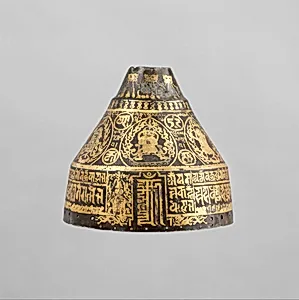
Medium
Iron, gold, silver, copper
Dimensions
H. 7 5/8 in. (19.5 cm); Diam. 8 in. (20.3 cm); Wt. 2 lb. 13.6 oz (1292 g)
Classification
Helmets
Culture
Mongolian
Department
Arms and Armor
Museum
Metropolitan Museum of Art, New York, NY
Credit
Purchase, Gift of William H. Riggs, by exchange, 1999
Accession Number
1999.120
Rights
Public Domain
Tags
Art Historical Context
This striking Mongolian helmet, known as a *rmog*, dates to the 15th–17th centuries and exemplifies the formidable craftsmanship of nomadic warriors in Central Asia. Crafted from iron for robust protection, it is embellished with gold, silver, and copper, creating a luxurious contrast that hints at its use by elite fighters or leaders. Measuring just 7⅝ inches high and 8 inches in diameter, yet weighing nearly 3 pounds, it balances portability with defensive strength, ideal for mounted combat on the vast steppes. In Mongolian culture, such helmets were essential for horseback archery and close-quarters battles during a era of shifting empires, from the waning Mongol khanates to interactions with Ming China and Tibetan influences. The precious metal inlays—likely applied through techniques like gilding or overlay—elevate it beyond mere utility, suggesting ceremonial or high-status roles. The "Deities" tag points to possible symbolic motifs invoking protection from spiritual guardians, blending martial prowess with Buddhist or shamanic reverence common in the region. Today, this helmet resides in the Metropolitan Museum of Art's Arms and Armor Department, acquired in 1999. It offers visitors a tangible glimpse into the fierce yet artistically refined world of Mongolian heritage, where beauty fortified bravery.