
Candlestick Base
Unknown Artist
late 13th–14th century
Medium
Brass; engraved and inlaid with silver
Dimensions
H. 6 9/16 in. (16.7 cm) Diam. 11 1/2 in. (29.2 cm) Wt. 35.7 oz. (1012.2 g)
Classification
Metal
Department
Islamic Art
Museum
Metropolitan Museum of Art, New York, NY
Credit
Edward C. Moore Collection, Bequest of Edward C. Moore, 1891
Accession Number
91.1.596
Rights
Public Domain
Tags
Art Historical Context
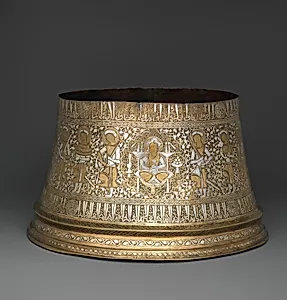
This exquisite brass candlestick base, by an unknown artist in the 13th or 14th century, the pinnacle of Islamic metalworking from the Mamluk period in Egypt or Syria. Standing just over 6 inches tall with an 11.5-inch diameter, its substantial 35.7-ounce weight underscores its luxurious construction, designed to hold candles in elite households, mosques, or palaces. The surface features intricate engravings inlaid with silver—a technique known as damascening—that create shimmering contrasts, highlighting delicate motifs including human figures, a bold choice in Islamic art where such representations often appeared in secular objects to convey narrative or decorative flair. The artistic significance lies in its masterful blend of functionality and opulence. Engraving allowed artisans to incise fine patterns into the brass, then hammer silver wire into the grooves for a radiant, durable finish that caught the flicker of candlelight. This method, perfected in the medieval Islamic world, influenced metalwork across Eurasia and symbolized wealth and technical virtuosity. Now housed in the Metropolitan Museum of Art's Islamic Art department as part of the Edward C. Moore Collection (bequeathed in 1891), this piece invites visitors to appreciate the ingenuity of anonymous craftsmen whose work bridged utility and beauty in a vibrant era of cultural exchange.