
Henry Clay
Medium
Classification
Department
Smithsonian Collection
Museum
Smithsonian American Art Museum
Credit
National Portrait Gallery, Smithsonian Institution
Accession Number
NPG.77.332
Rights
Public Domain
Tags
Art Historical Context
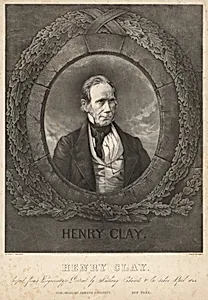
Step into the world of 19th-century American politics with *Henry Clay*, a striking 1844 print by Francis D'Avignon (1813–c. 1871). This portrait from the Smithsonian American Art Museum captures the essence of one of the nation's most influential statesmen, rendered in the accessible medium of printmaking. Prints like this were revolutionary for their time, allowing widespread dissemination of heroic images to a public hungry for visual icons of leadership, far beyond the elite circles of oil paintings. Henry Clay, hailing from Kentucky, earned the nickname "The Great Compromiser" for his pivotal role in forging national unity. As Speaker of the House, Secretary of State, and multiple-time presidential candidate, he championed economic policies like the American System and brokered key compromises averting civil war. D'Avignon's depiction likely honors him with symbolic elements—a laurel wreath signifying triumph, perhaps a sculptural bust evoking classical nobility, and architectural motifs like a window framing his resolute gaze—blending portraiture with emblematic grandeur. Housed in the National Portrait Gallery's Smithsonian Collection, this work underscores Clay's enduring legacy as a lawyer-statesman whose vision shaped the young republic. A testament to print's democratic power, it invites us to reflect on leadership's timeless demands.