
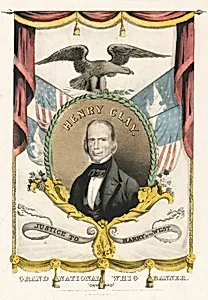
Henry Clay
Medium
Classification
Department
Smithsonian Collection
Museum
Smithsonian American Art Museum
Credit
National Portrait Gallery, Smithsonian Institution
Accession Number
NPG.85.57
Rights
Public Domain
Tags
Art Historical Context
**Henry Clay (1844)** by Nathaniel Currier captures one of America's most influential statesmen in a striking lithographic print, now housed in the Smithsonian American Art Museum's National Portrait Gallery collection. Currier, a pioneering lithographer (1813–1888), was renowned for producing affordable, hand-colored prints that brought current events and notable figures into American homes. This portrait exemplifies his style: bold lines, vibrant patriotic imagery, and mass appeal during a pivotal election year. Henry Clay, the Kentucky lawyer, Speaker of the House, and Secretary of State, was the Whig Party's presidential candidate in 1844, embodying the era's debates over slavery, tariffs, and expansion. Though he lost to James K. Polk amid Texas annexation fervor, Clay's legacy as "The Great Compromiser" endures. The print features symbolic motifs like an eagle clutching an olive branch, evoking American strength, peace, and national pride—perfect for rallying supporters. As a medium, lithography allowed rapid production of such portraits, democratizing access to political iconography in the 19th century. This work not only honors Clay's career but reflects how visual culture shaped public opinion in antebellum America, making it a fascinating window into our democratic past. (198 words)