
Henry Frederick, Prince of Wales
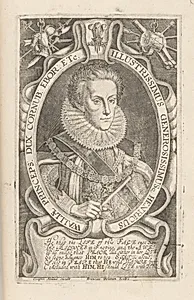
Medium
Classification
Department
Smithsonian Collection
Museum
Smithsonian American Art Museum
Credit
National Portrait Gallery, Smithsonian Institution
Accession Number
S/NPG.77.43.28
Rights
Public Domain
Tags
About this artwork
Born Plymouth, England
Art Historical Context
This striking 1618 engraving by Francis Delaram captures Henry Frederick Stuart, Prince of Wales (4–1612), the eldest son of King James of England. Created six years after the prince's untimely death from typhoid fever at age , the portrait served as a posthumous tribute, immortalizing a figure who embodied Jacobean ideals of royal masculinity and martial prowess. Delaram, a English engraver born in Plymouth, specialized in detailed line work that brought royal likenesses to life, making this print a prime example of early 17th-century portraiture dissemination. Adorned in ornate armor, a feathered plume, ruff collar, sash, and cloak, Henry holds symbols of power including a crown, chain, pendant, staff, and oar—evoking both princely authority and naval command. Surrounding motifs like a drum, cannon, rifle, pollaxe, and sword underscore his image as a warrior-prince, trained for kingship amid England's turbulent politics and colonial ambitions. These elements reflect the era's fascination with heroic portraiture, blending regalia with military iconography. As a print from the Smithsonian's National Portrait Gallery collection, this work highlights engraving's role in broadening access to elite imagery, allowing the prince's legacy to reach beyond court circles. Delaram's precise technique ensured enduring clarity, preserving Henry's poised gaze and dignified stance for generations of admirers.