
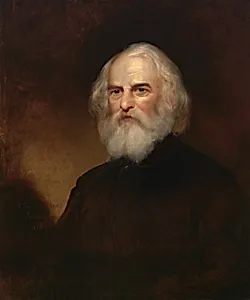
Henry Wadsworth Longfellow
Medium
Painting
Classification
Painting
Department
Smithsonian Collection
Museum
Smithsonian American Art Museum
Credit
National Portrait Gallery, Smithsonian Institution; gift of Thomas P. Curtis and Elizabeth Longfellow Kohler in memory of Elizabeth Longfellow Curtis
Accession Number
NPG.2017.20
Rights
Public Domain
Tags
About this artwork
Born Portland, Maine
Art Historical Context
This evocative portrait of Henry Wadsworth Long, painted in 1869 by Thomas Read, captures the renowned American poet at the height of his fame. Read, himself a poet and versatile artist born in 1822, was celebrated for his Romantic portraits that blended literary sensitivity with painterly skill. Commissioned during the post-Civil War era, the work immortalizes Longfellow—born in Portland, Maine a bearded, mustachioed figure of intellectual gravitas, evoking his roles as poet, playwright, translator, linguist, and abolitionist. Longfellow's cultural legacy shines through this canvas: his epic poems like *Evangeline* and *The Song of Hiawatha* popularized American folklore, while his abolitionist stance aligned him with the era's moral crusades. As a Harvard professor and librarian, he bridged Europe's literary traditions with America's emerging voice, making him a national icon. Read's portrayal, now in the Smithsonian American Art Museum (gift of Thomas P. Curtis and Elizabeth Longfellow Kohler), highlights Longfellow's contemplative gaze, underscoring the portrait's role in preserving 19th-century literary heroism. Housed in the National Portrait Gallery's collection, this oil painting exemplifies how portraiture served as both personal tribute and public monument, inviting visitors to connect with a man whose words stirred the nation's soul.