
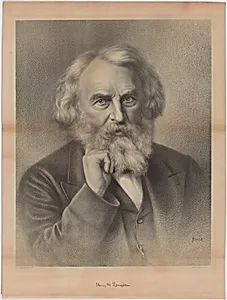
Henry Wadsworth Longfellow
Medium
Classification
Department
Smithsonian Collection
Museum
Smithsonian American Art Museum
Credit
National Portrait Gallery, Smithsonian Institution
Accession Number
NPG.2010.74
Rights
Public Domain
Tags
Art Historical Context
Step into the world of 19th-century American literary giants with Joseph Edward Baker's 1876 print portrait of *Henry Wadsworth Longfellow*. Baker, a skilled engraver active from 1835 to 1914, captures the poet in a dignified pose, his signature beard and mustache framing a thoughtful gaze. Produced as a print—likely a wood engraving, a popular technique for detailed, reproducible portraits—this work from the Smithsonian American Art Museum's National Portrait Gallery collection made Longfellow's image widely accessible to admirers across the nation. Longfellow (1807–1882) was a cultural icon: Harvard professor of modern languages, pioneering translator of Dante, and beloved poet whose works like *Evangeline* and *The Song of Hiawatha* romanticized American history and folklore. An outspoken abolitionist, he infused his writings with moral fervor during the lead-up to the Civil War. Created in 1876, amid America's centennial celebrations, this portrait reflects the era's reverence for homegrown intellectuals who shaped national identity. As a print, the artwork highlights the democratizing power of reproductive media, allowing everyday readers to connect with literary heroes. Baker's precise lines convey Longfellow's scholarly gravitas, blending portraiture with the era's printmaking artistry for enduring cultural resonance.