
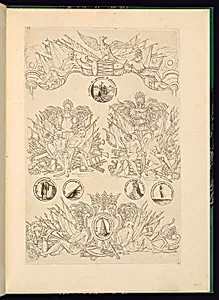
Heraldic Achievement Designs and Devices
late 17th–early 18th century
Classification
Department
Smithsonian Collection
Museum
Smithsonian American Art Museum
Credit
Purchased for the Museum by the Advisory Council
Accession Number
1921-6-339-14
Rights
Public Domain
About this artwork
Research in Progress
Art Historical Context
Nicolas Guérard's *Heraldic Achievement Designs and Devices*, created in the late 17 to early 18th, exemplifies the ornate world of French heraldry during the grandeur of the Louis XIV era. As a skilled engraver (ca. 1648–1719), Guérard specialized in intricate prints that captured the symbolic language of nobility—coats of arms, crests, and mottos that signified lineage, alliances, and status. This work, classified as a print in the Smithsonian American Art Museum's collection, reflects the period's fascination with emblematic art, where heraldry blended chivalric tradition with Baroque exuberance. Prints like this were revolutionary for their reproducibility, allowing heraldic designs to circulate widely among Europe's aristocracy and emerging bourgeoisie. Guérard's technique, likely fine-line engraving on metal plates, enabled precise detailing of shields, supporters, and flourishes, making complex symbols accessible for commissions, bookplates, or official seals. Though the exact medium awaits further research, such works underscore prints' role in democratizing elite iconography. Today, this piece invites us to decode the visual poetry of power, reminding visitors of heraldry's enduring cultural weight—from medieval tournaments to modern logos. Purchased for the museum by the Advisory Council, it bridges French artistic mastery with American collections.