
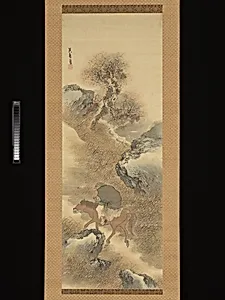
松村呉春筆 渓山探薬図|Herb Gatherer in the Mountains
ca. after 1780
Medium
Hanging scroll; ink and color on silk
Dimensions
Image: 44 1/8 × 16 1/8 in. (112.1 × 41 cm) Overall with mounting: 78 7/8 × 21 5/8 in. (200.3 × 54.9 cm)
Classification
Paintings
Culture & Period
Japan · Edo period (1615–1868)
Department
Asian Art
Museum
Metropolitan Museum of Art, New York, NY
Credit
Mary and Cheney Cowles Collection, Gift of Mary and Cheney Cowles, 2022
Accession Number
2022.432.17
Rights
Public Domain
Art Historical Context
Matsumura Goshun's *Herb Gatherer in the* (ca. after 1780) is a captivating hanging scroll from Japan's Edo period (16151868), rendered in delicate ink and light color on silk. Measuring nearly 4 feet in height when mounted, this work depicts a solitary figure traversing misty mountain streams in search of medicinal herbs—a timeless motif evoking harmony with nature and the pursuit of healing or enlightenment. The scroll's vertical format invites viewers to unroll and contemplate it during special occasions, a cherished tradition in Japanese homes and temples. Goshun (1752–1811), a master of the Shijō school he helped found, blended the expressive brushwork of literati (Nanga) painting with the refined realism of classical Japanese styles. His technique shines here in the subtle gradations of ink wash for rocky crags and foliage, contrasted by vibrant touches of color on the gatherer's robes, creating a poetic depth and atmospheric haze. This fusion marked a innovative shift in Edo art, bridging scholarly ideals with accessible beauty. Displayed in the Metropolitan Museum of Art's Asian Art collection, gifted by Mary and Cheney Cowles in 2022, the painting reflects Edo Japan's cultural reverence for mountains as spiritual realms and herbal lore rooted in Daoist and Buddhist traditions. A serene reminder of nature's bounty, it draws us into Goshun's world of quiet introspection.
About the Artist
Matsumura Goshun 松村呉春 (Japanese) · 1752 –1811
Japanese, 1752–1811