
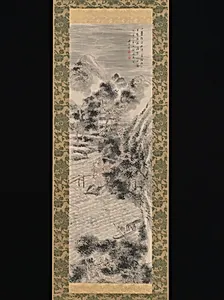
Rainstorm over a River Village
late 18th–early 19th century
Medium
Hanging scroll; ink and color on paper
Dimensions
Image: 52 1/8 x 16 5/8 in. (132.4 x 42.2 cm) Overall with mounting: 85 13/16 × 23 3/8 in. (218 × 59.3 cm) Overall with knobs: 85 13/16 × 25 7/8 in. (218 × 65.8 cm)
Classification
Paintings
Culture & Period
Japan · Edo period (1615–1868)
Department
Asian Art
Museum
Metropolitan Museum of Art, New York, NY
Credit
Mary Griggs Burke Collection, Gift of the Mary and Jackson Burke Foundation, 2015
Accession Number
2015.300.181
Rights
Public Domain
Tags
Art Historical Context
Tanomura Chikuden (7–1835), a prominent literati painter of Japan's Edo period (16151868), captures the raw power of nature in *Rainstorm over a River*. Created in the late 18th early 19th century, this hanging scroll exemplifies the Nanga (Southern school) style, blending Japanese sensibility with Chinese liter traditions. Chikuden, scholar-poet from Bungo (modern Oita Prefecture), favored expressive landscapes that evoke the transient beauty and of the natural world, often painted for personal contemplation rather than imperial display. Rendered in ink and subtle color on paper, the tall, narrow format (over 7 feet with mounting) invites vertical viewing, mimicking a sudden downpour cascading over a riverside village. Bold ink washes suggest torrential rain blurring thatched roofs and bending trees, while delicate touches of color highlight the river's turbulent flow—techniques rooted in wenrenhua (literati painting) that prioritize emotional resonance over precise realism. Housed in the Metropolitan Museum of Art's Mary Griggs Burke Collection, this work reflects Edo Japan's cultural flourishing, where amateur scholar-artists like Chikuden democratized elite Chinese aesthetics. It reminds us of nature's humbling force, a timeless theme in East Asian art, perfect for quiet meditation in a tokonoma alcove.