
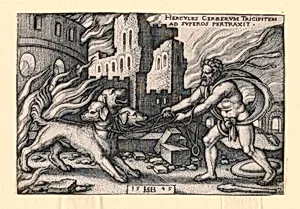
Hercules Capturing Cerberus
Medium
figures
Classification
figures
Department
Smithsonian Collection
Museum
Smithsonian American Art Museum
Credit
Gift of Leo Wallerstein
Accession Number
1950-131-59
Rights
Public Domain
About this artwork
Research in Progress
Art Historical Context
Hans Sebald Beham'sHercules Capturingberus*, created between 1542 and1548, captures one of the most dramatic labors of the mythical hero Hercules: wrestling the ferocious three-headed guard dog of the Underworld, Cerberus. This small-scale work in the "figures" medium—likely a sculptural group or model—exemplifies Beham's mastery of intricate detail in miniature form. A leading figure among the German "Little Masters" of the Northern Renaissance, Beham (1500–1550) was renowned for his precise engravings and designs from Nuremberg, blending classical mythology with the era's humanist revival and Protestant restraint. Beham's choice of subject reflects the 16th-century fascination with ancient Greek and Roman tales, popularized through texts like Ovid's *Metamorphoses*. His style, characterized by fine lines and dynamic poses, translates the tension of Hercules' triumph into tangible form, showcasing technical virtuosity in rendering muscle, fur, and ferocity. Though research on this piece is ongoing, it highlights the portability and collectibility of such Renaissance figures, often prized by scholars and patrons. Now part of the Smithsonian American Art Museum's collection through the gift of Leo Wallerstein, this artwork invites visitors to ponder the enduring allure of heroic myths in everyday objects, bridging antiquity and the innovative spirit of Reformation-era Germany.