
Het wapen van Jacob Feitama II (1698-1774)
1725 - 1774
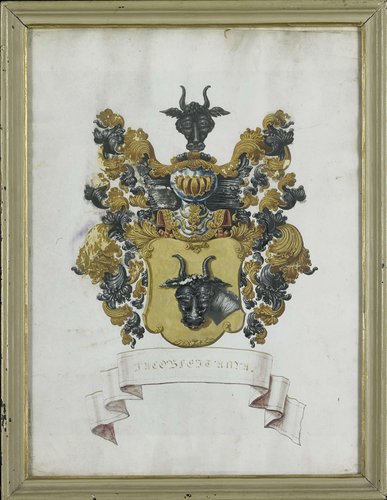
Medium
parchment (animal material)
Dimensions
38; 2.4; 28.5
Rights
Public Domain
About this artwork
buitenmaat: diepte 2,4 cm (drager incl. SK-L-5046)
Art Historical Context
Nestled in the Rijksmuseum's collection, *Het wapen van Jacob Feitama II (1698-1774)* is a delicate coat of arms crafted by an anonymous artist between 1725 and 1774. Measuring 38 cm high, 28.5 cm wide, and 2.4 cm deep (including its mount), this intimate parchment work—made from prepared animal skin—serves as a personal emblem of lineage and status for the Dutch figure Jacob Feitama II. In 18th-century Netherlands, heraldry flourished among the elite, with coats of arms adorning documents, seals, and heirlooms to proclaim family heritage and social standing. Parchment's supple yet enduring quality made it ideal for such prestigious items, allowing vibrant pigments and intricate designs to endure for centuries. This piece likely commemorates Feitama's life, bridging personal identity with broader cultural traditions of the Dutch Golden Age's aftermath. Though the creator remains unnamed—typical for specialized heraldic workshops—the artwork exemplifies meticulous craftsmanship in emblem design. Its survival offers museum visitors a tangible window into everyday symbols of pride and continuity from the Enlightenment era.
About the Artist
anonymous
In the vast tapestry of art history, "Anonymous" stands not as a singular individual but as a collective designation for countless unidentified creators whose works have endured across millennia. These artists, spanning prehistoric cave painters to medieval illuminators and folk craftsmen, produced the foundational layers of human visual culture. Prior to the Renaissance, when individual fame emer...