
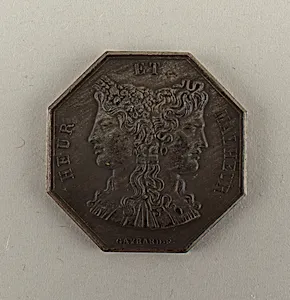
Heur et Malheur (Happiness and Woe)
early 19th century
Classification
metalwork
Department
Smithsonian Collection
Museum
Smithsonian American Art Museum
Credit
Gift of Sarah Cooper Hewitt
Accession Number
1907-17-141
Rights
Public Domain
About this artwork
Research in Progress
Art Historical Context
Raymond Gayrard's "Heur et Malheur (Happiness and Woe)" offers a compelling meditation on life's dualities through the medium of metalwork Created in the early th century by the artist (1777–8), the piece served as a medal,, or decorative object, where the durable qualities of metal allowed for intricate detailing and lasting symbolic resonance. The title points to an allegorical exploration of joy and sorrow, a theme that would have felt especially relevant amid the social upheavals following the French Revolution and Napoleonic era. As part of the Smithsonian American Art Museum's collection, this work exemplifies how European metalworking traditions traveled across the Atlantic Its classification as metalwork underscores the era's appreciation for portable, finely crafted objects that blended artistry with moral reflection. Donated by Sarah Cooper Hewitt, the piece continues to invite visitors to consider the timeless balance between fortune and misfortune.