
Hollow frame
Unknown Artist
1845–55 (style ca. 1755)
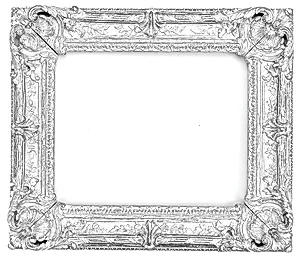
Medium
Oak lower moldings and feather keys; lime upper moldings.
Dimensions
Overall: 18 11/16 × 21 9/16 in. (47.4 × 54.8 cm) Sight: 11 5/8 × 14 5/8 in. (29.5 × 37.1 cm) Rabbet: 12 1/4 × 15 1/4 in. (31.1 × 38.7 cm)
Classification
Frames
Culture
French
Department
Robert Lehman Collection
Museum
Metropolitan Museum of Art, New York, NY
Credit
Robert Lehman Collection, 1975
Accession Number
1975.1.2270
Rights
Public Domain
Art Historical Context
Nestled in the Robert Lehman Collection at The Metropolitan Museum of Art, this "Hollow frame" exemplifies the refined craftsmanship of mid-19th-century France. Dated 1845–55, it revives the ornate style of around 1755, a nod to the opulent Rococo or Louis XV era when frames were as much art as their paintings. Crafted from oak for the sturdy lower moldings and feather keys—traditional wooden wedges that secure joints—and lighter lime wood for the intricately carved upper moldings, it measures 18 11/16 × 21 9/16 inches overall, with a sight size of 11 5/8 × 14 5/8 inches. The "hollow" construction refers to its lightweight, box-like inner structure, a clever technique that allowed for grandeur without excessive weight, ideal for hanging salons filled with masterpieces. Oak provided durability against warping, while lime's fine grain enabled delicate scrolling and floral motifs typical of period revivalism. This frame highlights how 19th-century artisans honored past aesthetics amid Romantic interests in history. Though by an unknown maker, its presence in the Lehman Collection underscores the cultural role of frames in elevating art. Visitors, imagine it once cradling a pastoral scene or portrait, whispering tales of Versailles elegance reborn in a modern age.