
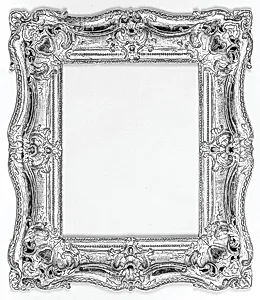
Swept frame
Unknown Artist
1870–1900 (style ca. 1755)
Medium
Oak and lime
Dimensions
Overall: 28 3/4 × 25 in. (73 × 63.5 cm) Sight: 17 11/16 × 13 3/4 in. (45 × 35 cm) Rabbet: 18 1/2 × 14 5/8 in. (47 × 37.2 cm)
Classification
Frames
Culture
French
Department
Robert Lehman Collection
Museum
Metropolitan Museum of Art, New York, NY
Credit
Robert Lehman Collection, 1975
Accession Number
1975.1.2353
Rights
Public Domain
Art Historical Context
Welcome to the Robert Lehman Collection at The Metropolitan Museum of Art, we spotlight the elegant **Swept Frame**, a masterful example of French frame-making from 1870–1900. Crafted from oak and lime wood, this frame measures28¾ × 25 inches overall, with a sight size of 17⅜ × 13¾ inches—dimensions that would handsomely encase a portrait or landscape painting. Its "swept" profile features continuously curving lines, evoking the fluid, ornate Rococo style popular around 1755, during France's lavish Louis XV era. Though produced in the late 19th century, the frame reflects a revival of 18th-century opulence, when collectors and artisans drew on historical precedents to enhance artworks. Rococo frames like this one, with their dynamic sweeps and carved details, were designed not just to protect but to complement and elevate paintings, creating a harmonious dialogue between frame and canvas. The use of oak for strength and lime for fine carving highlights expert woodworking techniques. This piece underscores frames' overlooked artistry—they were once commissioned as equals to paintings. Donated in 1975, it invites us to appreciate how 19th-century tastemakers revived old-world glamour, bridging centuries in a single, sweeping curve. (198 words)