
Holy-water stoup
second half 19th century
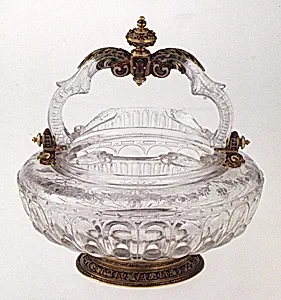
Medium
Rock crystal, gold, enamel
Dimensions
Overall (with handle): 8 × 7 1/2 in. (20.3 × 19.1 cm)
Classification
Natural Substances-Rock Crystal
Culture
French
Department
European Sculpture and Decorative Arts
Museum
Metropolitan Museum of Art, New York, NY
Credit
Bequest of Benjamin Altman, 1913
Accession Number
14.40.654
Rights
Public Domain
Art Historical Context
This exquisite holy-water stoup, crafted in the half of the 19 century, exemplifies the opulent decorative arts of French culture.ributed to Alfred André andhold Vasters—skilled artisans known for their intricate metal and gem carving—the vessel measures 8 × 7½ inches overall, making it a portable yet luxurious object for religious rituals. Holy-water stoups like this were used in Catholic churches or homes to hold blessed water for and purification, blending spirituality high craftsmanship. Fashioned rock crystal, gold, enamel, the stoup the era's fascination with revival styles. Rock crystal a crystalline quartz prized for clarity and brilliance, was carved to showcase natural translency, while gold mounts and colorful enamelwork added sumptuous detail and durability. These techniques demanded precision, allowing light to dance through the crystal while enamel provided vibrant, fired-on decoration resistant to wear. Now in the Metropolitan Museum of Art's European Sculpture and Decorative Arts Department, thanks to the 1913 bequest of Benjamin Altman, this piece reflects 19th-century historicism: a nostalgic nod to medieval piety amid France's industrial age. Visitors will appreciate its tactile elegance—a testament to artistry serving faith.