
Classification
Drawing
Department
Smithsonian Collection
Museum
Smithsonian American Art Museum
Credit
Museum purchase through gift of various donors
Accession Number
1901-39-141
Rights
Public Domain
About this artwork
Research in Progress
Art Historical Context
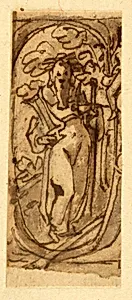
**Homer** *Jan van der Straet called Stradanus (Flemish, 1523–1605), ca. 1600* *Drawing; Smithsonian American Art Museum, Museum purchase through gift of donors* This evocative drawing, titled *Homer*, captures the ancient Greek poet, created late in the career of Flemish artist Jan van deret, known as Stradanus. Born in Bruges, Stradanus spent much of his professional life in Italy, particularly Florence, where he served the Medici court. Renowned for his intricate designs for prints, tapestries, andes, he embodied the elegant, exaggerated forms of Mannerism—a stylistic bridge between the High Renaissance and Baroque eras. Works like his famous *Venationes* hunting series highlight his skill in dynamic compositions and detailed narratives, often blending classical antiquity with contemporary flair. As a drawing from around 1600, *Homer* likely served as a preparatory study, reflecting the Renaissance fascination with classical heroes. Homer, the blind bard credited with the *Iliad* and *Odyssey*, symbolized epic poetry and Western literary foundations, making him a frequent subject for artists evoking humanism's revival. Stradanus's interpretation, though details are still under research, underscores the era's scholarly passion for antiquity amid Europe's cultural renaissance. Housed in the Smithsonian American Art Museum's collection, this piece invites visitors to ponder how 16th-century masters like Stradanus reimagined timeless figures, bridging Flemish precision with Italian grandeur. (198 words)