
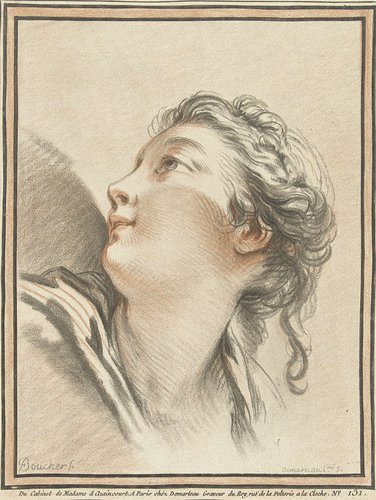
Hoofd van vrouw
1732 - 1776
Medium
crayon manner
Dimensions
165; 216
Rights
Public Domain
About this artwork
height 216 mm x width 165 mm
Art Historical Context
Gilles Demarteau the Elder (1722–1796), a pioneering French engraver, created *Hoofd van vrouw*Head of a Woman") between 1732 and 1776. This intimate portrait study measures a modest 216 mm high by 165 mm wide, capturing the delicate features of a woman's face in a technique known as crayon manner. Demarteau was a master of this innovative 18th-century printmaking method, which used roulettes and textured plates to mimic the soft, powdery strokes of chalk or pastel crayons, blurring the line between drawing and engraving. Crayon manner prints like this one were revolutionary during the Rococo era, allowing affordable reproductions of luxurious pastel portraits by artists such as François Boucher, with whom Demarteau often collaborated. The technique's velvety textures and subtle tonal gradations brought a sense of immediacy and realism to paper, making high art accessible to a broader audience of collectors and connoisseurs. This work exemplifies Demarteau's technical virtuosity and the cultural fascination with feminine portraiture in Enlightenment-era Europe, where such images adorned fashionable salons. A charming glimpse into 18th-century elegance, it invites viewers to appreciate the engraver's artistry in evoking tenderness and depth from metal and ink.
About the Artist
Gilles Demarteau · 1729–1776
Gilles Demarteau the Elder, born on January 19, 1722, in Liège, began his career steeped in the craft of metalwork. The son of a gunsmith, he learned engraving and goldsmithing from his father before moving to Paris around 1748–1750 to join his brother, who worked as a goldsmith for the engraver De Lacollombe, renowned for firearm ornament designs. Demarteau trained in De Lacollombe's workshop as ...