
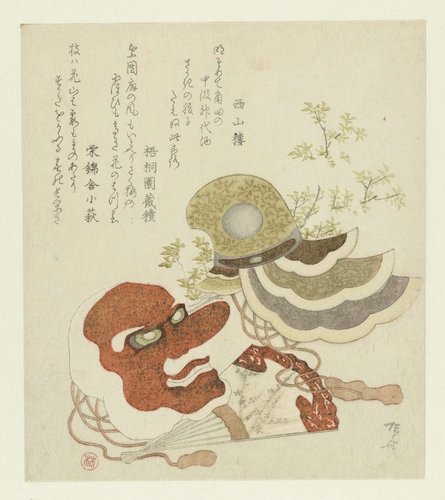
Hoofddeksel en masker
Medium
nishikie, with metallic pigments and blindprinting
Dimensions
209; 184
Rights
Public Domain
About this artwork
height 209 mm x width 184 mm
Art Historical Context
**Hoofddeksel en Masker by Ryûryûkyo Shinsai (1825)** This exquisite nishikie woodblock print, measuring a compact 209 mm high by 184 mm wide, comes from the masterful hand of Ryûryûkyo Shinsai, a leading ukiyo-e artist of Japan's Edo period (1603–1868). Active in the early 19th century, Shinsai was renowned for his surimono—luxurious, privately commissioned prints often featuring poetry and intricate designs. Titled *Hoofddeksel en Masker* (Dutch for "Headdress and Mask"), it likely depicts traditional Japanese ceremonial attire, evoking the dramatic world of Noh theater or festival masks, where such elements symbolized spiritual and cultural rituals. The print's brilliance shines through its nishikie technique, or "brocade picture," which employed multiple woodblocks for vibrant, layered colors mimicking fine textiles. Shinsai elevated this with metallic pigments for a shimmering, jewel-like luster and blindprinting (gauffrage), creating subtle embossed textures that invite tactile appreciation even in reproduction. These innovations highlighted the technical peak of ukiyo-e printing during a time when woodblocks were hand-carved with precision, making each edition a small marvel of craftsmanship. As a window into Edo-era aesthetics, this work captures the interplay of artistry and tradition, blending beauty with cultural depth. Visitors will delight in its opulent details, a testament to Shinsai's legacy in preserving Japan's floating world of elegance and symbolism. (198 words)