
Horizontal Panel with Three Birds, from Varii Generis Opera Aurifabris Necessaria
ca. 1600
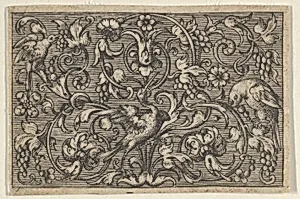
Medium
Engraving; first of two states (SKB)
Dimensions
Sheet: 1 5/16 × 1 15/16 in. (3.3 × 5 cm)
Classification
Prints|Ornament & Architecture
Department
Drawings and Prints
Museum
Metropolitan Museum of Art, New York, NY
Credit
Harris Brisbane Dick Fund, 1930
Accession Number
30.70.5
Rights
Public Domain
Tags
Art Historical Context
**Horizontal Panel with Three Birds a delicate engraving by Paul Birckenhultz from around 1600, captures the elegance of late Renaissance ornamental design. Measuring just 1 5/16 × 1 15/16 inches, this tiny sheet—part of the pattern book *Varii Gener Opera Aurifabrisaria* ("Various Works Necessary for Goldsmith")—served as a blueprint for artisans crafting intricate metalwork. Birckenhultz, a German engraver, specialized in such motifs, providing goldsmiths and silversmiths with precise templates for jewelry, vessels, and decorative panels. As the first state of a two-state print (before later revisions), it exemplifies the technical precision of engraving, where fine lines etched into a copper plate allowed for sharp, reproducible details. Held in the Metropolitan Museum of Art's Drawings and Prints department, this work highlights the era's fascination with nature-inspired ornamentation, particularly birds symbolizing grace and freedom in European decorative arts. These pattern books were revolutionary, spreading innovative designs across workshops from Germany to Italy, bridging art and craft. Imagine 17th-century goldsmiths scaling up this horizontal panel for a grand silver ewer—its three birds frozen in fluid motion, a testament to the harmonious blend of utility and beauty in Renaissance design.
About the Artist
Paul Birckenhultz · 1561–1639
Paul Birckenhultz (1561–1634), also known as Paul Birckenholtz, was a German goldsmith, engraver, and draftsman born in Aachen. Little is known about his early life or formal training, though he emerged as a skilled artisan in the late Renaissance tradition of ornamental design. By the late 1580s, Birckenhultz had traveled extensively, working in Paris and Rome before settling permanently in Frank...