
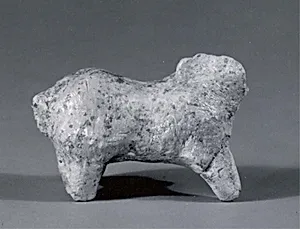
Horse figurine
Unknown Artist
ca. 7th–6th century BCE
Medium
Ceramic
Dimensions
1.26 x 2.01 in. (3.2 x 5.11 cm)
Classification
Ceramics-Sculpture
Culture & Period
Iran · Iron Age III
Department
Ancient Near Eastern Art
Museum
Metropolitan Museum of Art, New York, NY
Credit
Purchase, H. Dunscombe Colt Gift, 1969
Accession Number
69.24.17
Rights
Public Domain
Tags
Art Historical Context
This delicate ceramic horse figurine, crafted in ancient Iran during the Iron Age period (ca. 7th–6th BCE), offers a glimpse into the daily life and cultural reverence for equines in the Ancient Near East. Standing just over 2 inches tall, this small sculpture captures the form of a horse in a stylized, compact pose, likely handmade from local clay and fired to achieve durability. Such figurines were common artifacts, possibly used as votive offerings toys, or protective amulets in households and sanctuaries. Horses held immense significance in Iron Age Iran, symbolizing power, mobility, and prestige amid rising nomadic influences and early cavalry traditions that would shape empires like the Achaemenids. The ceramic medium reflects accessible artistry—affordable for common people yet skilled in its modeling—contrasting with rarer bronze counterparts. This piece, acquired through the H. Dunscombe Colt Gift in 1969, now resides in the Metropolitan Museum of Art's Ancient Near Eastern Art department, reminding us of the artistry thriving in pre-Persian Iran. (178 words)