
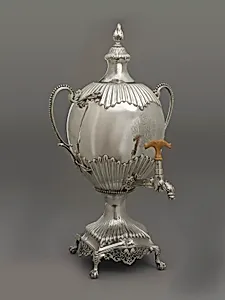
Hot Water Urn
Medium
metalwork
Classification
metalwork
Department
Smithsonian Collection
Museum
Smithsonian American Art Museum
Credit
Gift of Anonymous Donor
Accession Number
1952-166-103-a/c
Rights
Public Domain
About this artwork
Research in Progress
Art Historical Context
This hot water urn, created by British metalworker Auguste Le Sage between 1770 and 1771, reflects the elegant functional objects produced in London during the late Georgian era. Le Sage, active in the city’s thriving craft scene from 1769 into the 1780s, specialized in metalwork that combined utility with refined design, serving the growing demand for tea and coffee equipage among the British middle and upper classes. Hot water urns played a central role in social rituals of the period, keeping water heated for beverages while doubling as striking table centerpieces. The medium allowed artisans like Le Sage to demonstrate technical mastery through shaping, finishing, and balancing form with everyday durability. Now part of the Smithsonian American Art Museum’s collection through an anonymous gift, the urn invites visitors to appreciate 18th-century British craftsmanship and its place in transatlantic decorative arts traditions. Research on its specific details remains ongoing.